Thursday, May 14, 2009

New World Wines

Welcome back fellow wine-lovers,

Brenda Szgatti here, simplifying the wine world for the everyday wine drinker
.
As promised, I am back with the follow-up to my last post on Old World wines, and today will talk a bit about New World wines :-) As there is a lot of information to cover, I am going to split this section into two separate posts. That way, you will hopefully have a chance to try a few of the wines recommended before the next section comes out!
As always, please let me know if you have any questions. You can either leave a post on the blog (a good way to let others see your question/comment) or you can email me at brenda.szgatti@gmail.com. Also, don't forget to fill out the form at the bottom of the page and subscribe to keep current on new posts or updates from me!


So, picking up from where we left off, New World wine regions encompass basically everything outside of Europe, including:
  • Australia
  • New Zealand
  • Argentina
  • Chile
  • Canada
  • United States
  • South Africa

New-World wines tend to be more approachable for the new or novice wine drinker for three reasons:

  1. They are widely available
  2. The varietal or blend is clearly identified on the label (you know what you are getting!)
  3. Price point is generally reasonable

Also, new world wines tend to have the flavour profile that a new wine drinker is looking for. Big, juicy, ripe fruit characteristics, elements of spice and american oak influence, while being easy to drink and approachable. While these wines will pair well with food, many of them are also excellent for sipping on their own.

Let's jump into some suggested wines to try (that's the fun part anyways, right??).

AUSTRALIA

While most commonly known for it's full-bodied, in-your-face Shiraz (red), Australia also produces some great (and very big) Cabernet Sauvignon (red), Semillon (white) (se-me-yon) and the ever-popular Chardonnay (white). Typically full of flavour and character, Australian wines have become popular in part thanks to a couple of the huge producers out there (you know which ones I'm talking about ... the ones with the animals on the label...). These wines, with their funky labels and low price-points (not to mention their easy-drinking and approachable fruitiness) have played a large part in attracting many new wine drinkers, expecially the younger generation.

My goal (or one of my goals) is to help you realize and appreciate how your taste can change as you try better and different wines.

My Picks:

Pillar Box Red - this delicious little treat is a blend of Cabernet Sauvignon, Shiraz and Merlot (the 3 most common red varietals). The wine is big, fruity and spicy (what everyone loves about Australian wines!), and is finished with a screw-cap (love it!!). It is made by one of Australia's top winemakers, Chris Ringland, and will definitely be a crowd pleaser! Serve with grilled meats, perfect for your summer bbq, or enjoy on it's own! Around $20
**NOTE** Also try Pillar Box White, a delicious, refreshing white!

Stickleback White - made by Ben Glaetzer (another one of the top winemakers in Australia), this white wine is a blend of Chardonnay, Semillon and Sauvignon Blanc, so a little bit of everything they grow well in Australia. With a great richness from the Chardonnay, the wine also has a crisp, refreshing characteristic from the Sauvignon Blanc, and a smooth silkiness from the Semillon. The best part ... it's $15!! Definitely a must-try!
**NOTE** There is also a Stickleback red, a blended wine that is the same price and a great table wine. These wines are available at select wine stores, so make sure to ask when you go to your local boutique ...


NEW ZEALAND


The beautiful land of the Kiwis is known well for it's production of Pinot Noir (red) and Sauvignon Blanc (white). Because it is a cooler climate, these varietals thrive, and are turned into some very delicious wines! Those of you who know me know that I absolutely love NZ Sauvignon Blanc ... I don't care if all the wine snobs out there think that they are all the same, or claim to be totally over the whole "gooseberry" thing. I mean really, who doesn't love the a hint of gooseberry fruit in their light, refreshing, and most certainly crisp Sauvignon Blanc?! And the Pinot Noir will become your new best friend for pairing a red with your favorite "white wine" food (chicken, turkey, ham...).


My Picks:

Kim Crawford Sauvignon Blanc - This is one of my favorite NZ Sauvignon Blancs ever. It comes with a beautiful green label, a screw cap, and has so much flavour! Grassiness (yes grass, very common with NZ Sauv. Blanc), gooseberry and stone fruit aromas and flavours, and is crisp and refreshing. Can be found at most shops for $20-$25, and is extremely delicious. Enjoy on it's own (the perfect patio sipping wine!!), or try with seafood or thai food.


Nobilo Sauvignon Blanc - For under $20 try the Nobilo SB ... many of the same characteristics as the Kim Crawford, slightly muted. Also delicious for sipping on the patio, or the same food recommendations above.


**NOTE** Most wines from New Zealand come with a screw-cap top. DO NOT think that this makes the wine 'cheap' or lower quality ... NZ was one of the first countries to really push the use of the screw-cap, as their wines are meant to be consumed while young, and the screw-cap is a highly reliable closure. Many more countries are switching to the screw-cap as it has also been proven to allow a wine to age as well as a cork! (You will also see synthetic cork and the zork on the market ... both reliable alternatives to cork).


Kim Crawford Pinot Noir - Why stop at just the white? The Kim Crawford Pinot Noir is also delicious! Light in style, good fruit flavours, and a tiny bit of that "gamey" characteristic that makes pinot noir so delicious! The wine is fairly true to type for a pinot, and will pair deliciously with lighter meats such as pork, chicken, ham and turkey (can you say holiday wine!!). Also great to sip on its own. Will be somewhere around $25. Bring it to your next dinner party!


ARGENTINA


Argentina has become very popular and widely-known for the production of delicious and approachable Malbec (red), and is also the sole country to grow and produce a white grape called Torrontes (like Toronto with ez on the end). Malbec is quickly becoming a crowd favorite (I'm sure you have enjoyed a glass or two!), with it's dark flavour, ample tannins and subtle fruit notes. While typically aged in oak and made perfectly to pair with food, Malbec from Argentina still offers some of the best value available on the market today! Torrontes, on the other hand, is still relatively uncommon and unknown, but is a must-try! Very similar in style to the Viognier of California (which we will talk about in a bit), Torrontes is crisp and refreshing with great stone fruit and citrus fruit notes. As mentioned above, Argentinian wines (along with Chilean and Spanish) still provide some of the best value on the market right now


My Picks:
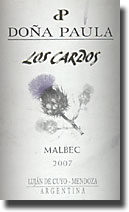


Anything from estate: Dona Paula - This estate is one of my favorites from Argentina. Their Los Cardos line offers a Malbec, a Shiraz, a Cabernet Sauvignon, and a Chardonnay, and is available for around $13!! Their estate selection (all of the grapes used in the wine are grown at their own estate) offers the same varietals for around $17 and is also incredible value. Highly recommended!!


Stay tuned for the next installment on New World Wines, where we will talk about the delicious wines from Chile, Canada, the USA, and South Africa!
Please take advantage of the comment section on the blog to leave any questions or comments that you may have. Tried a bottle that I recommended? What did you think?? Is there a certain wine you have tried lately that you just loved and would like to recommend to people? You can do it all here!
Until next time, drink responsibly and enjoy!!
Cheers,
Brenda Szgatti
~~~~~~~~~~~~~~~~~~~~~~~~~~~~~~~~~~~~~~~~

Thursday, April 23, 2009

Old World Wines

Hey everyone,

Brenda Szgatti back with another edition of From The Grapevine ... simplifying the wineworld for the everyday wine drinker!

During your wine-drinking escapades, I'm sure you have heard people talk about old-world and new-world wines and regions. But what does that really mean, and what is the difference?

It is pretty much just like it sounds ... Old World wines come from the Old World, and New World wines come from the New World. Pretty simple, now you just have to know which countries constitute old and which are new! And we will also find out a bit about what kind of characteristics you can expect from each area.

Here is a break-down of the main Old-world wine-producing countries:

OLD WORLD
  • France
  • Italy
  • Spain
  • Portugal
Basically anything outside of Europe is considered to be New-World, which we will talk about next week :-)

Let's talk a bit about what we can expect from Old-World Wines.

Getting into old world wines tends to be an intimidating venture for most people, especially new wine drinkers. Typically, when learning about wine, we start with the fruity, full-bodied, easy-drinking australians, and then maybe move into some argentinian or chilean wine. You don't see many new wine drinkers picking up a Cotes du Rhone or Barolo for their first bottle! Not only because they don't know what it is, but also because the price point tends to be much higher!

Many old world wines will not be labeled the way we are used to (with the varietal labeled right on the bottle). They tend to be identified by the region they are from, and from there you are supposed to know what kinds of grapes the wine is made from, and what style it will be. This can be extremely confusing for the novice wine drinker, and tends to turn them off of wines from Europe.

In my forthcoming book we will be talking more in-depth about specific blends and where they come from. For now, however, I will outline a few specific Old-World wines that are worth trying, and let you experiment from there!

So, what can we expect from an old-world wine?

Typically we can expect the wine to have spent some time in oak (sometimes not, but generally yes). Also, there may be more "earthy" elements to these wines. This can be a great thing, especially when pairing wine with food. The vines from many of these regions are very old so the wines will have a lot of character to them, as the roots of the vines are deeper into the ground.

Most old-world wines pair extremely well with food, and this is a great way to enjoy them. If you think about it, they have been making these wines for thousands of years in most cases, so they have created wines that pair with the food that they eat. Italian food is delicious with a nice bottle of Chianti (will discuss in a bit), and rich French foods will taste delicious with a nice bottle of Cotes du Rhone or Chateauneuf-du-Pape ($$).

Here are a few old-world styles I would recommend trying. Feel free to experiment, and remember, you should always be able to find something within your budget.

FRANCE

Cotes du Rhone - this is a blended wine from the Rhone valley in France. While it can be made from any of 13 allowed varietals, typically consists of Grenache, Syrah and Mourvedre. Usually medium-bodied, these wines tend to be nice and fruity with hints of minerality and earthiness. Try and find a bottle between $15-$20. Ask your salesperson at the wine store!

**great vaue - look for "Chateau de Valcombe - Syrah-Grenache" - same grapes and same region, but less expensive as it is not classified as Cotes du Rhone **

Bordeaux - one ofthe oldest wine growing wine regions in France, Bordeaux can be quite pricey but there are some good values out there. Made from 5 allowed varietals, typically consisting of mostly Cabernet Sauvinon and Merlot. Great with food! You can find good value from Bordeaux between $20 and $30 typically (or more if in your budget!!).

ITALY

Chianti - This is the most highly produced Italian wine, and a Chianti will be made from the Sangiovese grape in the Tuscany region. This is one of my favorite types of Italian wine, as it is fairly light in style and pairs extremely well with food (especially pasta!!). Tends to be quite earthy and almost always spends time in oak. Can find good value between $15 and $20.
** Try the Peppoli Chianti by Antinori ... this is available on many wine lists in restaurants, and personally is very good value **

Valpolicella - A blended wine made from 3 grapes (Corvina, Rondinella, and Veronese) from the region of Valpolicella in Verona. Typically light, fresh and fruity, Valpolicella is another great food pairing wine. Not as earthy as Chianti and with more fruit characteristics. You can find many good values, usually between $15-$25.

Amarone (Amarone della Valpolicella) - Made from the same types of grapes s Valpolicella, but they are dried before pressing the juice out of them, producing a rich, concentrated wine full of flavour. Amarone will be much more expensive and a great gift idea or special occasion wine.
**Try Ripasso - not as concentrated as Amarone as it is made from the second pressing of the dried grapes (ripasso - second pass/press). Can find great value for around $25) **

SPAIN

Rioja - This is the most commonly-known region in Rioja, and produces delicious wines. Wines from Rioja are typically blends, combining Tempranillo and Garnacha/Grenache (most widely-planted Spanish varietals) with Graciano and Mazuelo (indigenous Spanish varietals). Wines fom Rioja almost always spend time in oak and tend to be quite earthy with that "old-world" characteristics. Subtle fruit flavours and great character lend these wines to pairing well with Tapas or any Spanish-style food. Also pair well with grilled meats and light cheeses.
** Try anything from LAN (phenomenal Rioja estate) - Crianza (spends 1 year in oak) can be found around $20 and is delicious!! **

Monastrell -also known as Mourvedre in France, this grape is grown in the southern region of Jumilla (hu-mi-ya) in Spain. While not widely known, this grape is growing in popularity, as are all Spanish wines. Wines from this region exhibit many of the same characteristics as Australian Shiraz; full-bodied, juicy, dark-fruit characteristics, and excellent balance. Try one today ... you will love it!!
** Try the Juan Gil - Silver Labe Monastrell. This is one of my favorite wines ever, and you should be able to find it at your specialty wine shop for around $25-$30. Definitely worth splurging for a special night! **

PORTUGAL
Of course most people think of Port when they think of Portugal, but they also make phenomenal wines (and GREAT value!!).

Vinho Verde - This is a super fresh, fruity, vibrant white wine made from a blend of grapes. You will notice they exhibit a slight effervescence (gassiness) which is naturally occuring and makes this wine the perfect summer patio-sipper! And the best part ... you can get a bottle for around $10!! Excellent value - a must try!


Overview

As you can see, there tends to be quite a difference in price-points from Italy and France to Spain and Portugal. This is where you need to use your judgement (and budget) to determine what you choose to drink. While it is more common to see lower-priced great-value wines from Spain and Portugal, there are also some phenomenal values coming out of France and Italy. This is where it is important to talk with the salesperson at your favorite wine store ... they will know what is new and hot (and great value!).

So, now that you are armed with a list of some new recommendations, get out there and try them! I want to hear what you think, and if you have other suggestions, so let us know!

Next week we will be talking about New-World wines, and comparing the two styles a bit more.

And don't forget to sign up for THE VINE (at the bottom of the page). This will keep you posted on new articles and news (and, of course, when my book is done!).

Happy wine-drinking everyone!

Cheers,

Brenda Szgatti

Tuesday, April 14, 2009

Spanish Wines ... The unsung heroes!!

Hello fellow wine lovers,

Brenda Szgatti here with another edition of From The Grapevine ... simplifying the wineworld for the everyday wine drinker :-)

So, had any good vino lately? I hope so! If so, let us know what it was! I know our readers would love some of your suggestions, or to know your favorites! And I will do my best to get my favorites out there... Also, make sure to sign up for THE VINE ... which will keep you posted on new articles and fun stuff on my blog!

Let's talk about Spanish wines.

Spanish wines, you ask ... are they any good?

Yes, yes, yes, yes, yes!!!

And they are INCREDIBLE value too!

In my time working as a wine agent, I was very fortunate to be exposed to some of the best Spanish wines produced. And the best part, you can get some extremely delicious wine for a great price!

As Spain has the most vineyards planted of any country in the world, so you would think their wines would be extremely popular everywhere. Right now, however, Spanish wines are not as popular in North America as, say, Australian or Chilean wines, so you won't find the same selection. The main reason is that for years, Spain only exported the cheap, lower-quality wines in large volume, so Castillo d'Almansa is all people know! However, as people are realizing the value that is available, agencies are beginning to bring in a better selection, and you will begin to see more and more of this delicious gloriousness in your local liquor store (and at some of the most reasonable prices out there!).

Most fine-wine stores will have a great selection of Spanish wines (they have been in on the secret for a long time!), so make sure you ask the salesperson where their Spanish section is, or if they can recommend a great Spanish wine (and don't be afraid to specify your desired price-point ... it is their job to help you find what you are looking for!!).

Known mostly for their reds, Spanish wines are typically comprised of the most widely-planted Spanish grape, Tempranillo (Tem-pra-nee-oh) or Grenache (gra-nash), (although other varietals are quite common, but usually in blends). They also make some delicious whites from indigenous varietals such as viura and malvasia, but are less common. If you happen across one, try it out! One of my favorites is the MUGA White ... Muga is a legendary Spanish estate, and not something to be missed :-)

Stylistically, the wines tend to spend at least some time in oak, exhibit old-world earthy characteristics, and have excellent structure.

As with Italian wines, Spanish wines were originally made to pair with Spanish food. Now, while you may not eat Tapas on a regular basis at home, you can rest assured that these wines are meant to pair with food, and almost any kind! Whether you are having pizza, pasta, or hamburgers, there is a good chance that the bottle of Crianza you picked up for dinner will be delicious!

Like other old-world countries (France, Italy, Portugal), they have a classification system to denote the age of the wine. Crianza, Reserva and Gran Reserva are the different classifications, and get progressively older (and therefore more expensive) as you go.

So, what should you look for when shopping for the perfect Spanish wine?

Vintage - anything from 2004 is highly recommended ... it was an outstanding vintage. Although because of how Spain is situated geographically, they are fortunate to have very consistent production year after year, so there is really no bad vintage. In the lower price points, the wine may not have a vintage, which means it is a blend of vintages. This is not necessarily a bad thing, and can present great value.

Price point - This depends on your budget ... you can find a lot of great values in Spain for $15-$20. If you want to go higher, ask your salesperson what they recommend ...

Varietal - Many Spanish wines are being "north-americanized", meaning that they are labeling the bottles with what varietal(s) the wine is made with. You typically can't go wrong with Tempranillo, and if you can find a Rioja (most famous wine-producing region in Spain) for $15-$20 I would try it (Try Montebuena ... widely available). Also, if you find a Crianza under $25 I would give it a try (LAN is a great Spanish estate ... anything from them is fabulous!). Tempranillo is approachable and generally easy to drink, while offering great flavor and value for the money.

Labeling - Many Spanish wines that are newer to the market are coming out with crazy eye-catching packaging. To be honest, I have bought wine based on the labe before ... I think everyone has. It's not a bad way to go ... but I would ask the opinion of the person working at the store if they have tried or heard anything about the wine just to be sure.

Now please keep in mind that the selection will vary from store to store, so for the best chance to find any of the wines discussed here, I suggest you try your local specialty wine store. If you are lucky, your local liquor store will have a good selection. They may also be able to bring a wine in for you, but they won't know if you don't ask!

I would like to finish off with a few of my absolute favorites, some of which are widely available, and some of which are not. You can always go into your local wine or liquor store and ask if they have them, or if they are able to bring them in for you. Most are under $20 (Canadian ... those of you in the U.S. will find your prices to be waaay lower!).

  • Montebuena - this is a blended red from the Rioja region of Spain. Fairly light in style, it drinks very well on its own or paired with your favorite pizza/pasta/or grilled meats. Phenomenal value for the price!
  • Garnacha de Fuego - 100% old-vine Grenache. You can't miss the bottle, as it has flames all over it. Lots of rich dark fruit flavors with a nice black-pepper spice. Delicious!!
  • CODICE - this wine is made by a winemaker by the name of Marcos Eguren, who is one of the top 3 winemakers in all of Spain. 100% tempranillo, spends 6 months in oak, and comes in around $11-$14. BARGAIN VALUE!! (Also check out Protocolo by the same winemaker ... under $10!!).
  • Juan Gil Silver Label Monastrell - This is probably my favorite wine ... value for your dollar I find it absolutely delectable. Around $25 per bottle, this wine spends 12 months in new frenck oak barrels and is made with 100% old vine Monastrell (this is the type of grape, grown mostly in the South-eastern region of Jumilla in Spain). With rich dark fruit characteristics, a nice level of black-pepper spice, and a medium to full-bodied weight, this wine is perfect for anyone who loves the flavor of Australian Shiraz but with an old-world kick!! Look at your local specialty wine store for this gem!

Well, that's it for now. Don't forget to subscribe to THE VINE to stay up to date on the latest happenings here at From The Grapevine! And remember, if you have any questions, just post a comment and I will do my best to get you the answer!

Cheers!

Brenda Szgatti